
"tropical crops"
1000 article(s) found
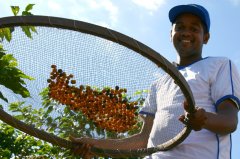
The Variety and Taste of Brazilian Coffee Development of planting, production and picking of Brazilian Coffee
Although the variety of Brazilian coffee is diverse, Brazilian coffee is suitable for the taste of the public. For example, coffee produced in the northern coastal areas has a typical iodine taste, reminiscent of the sea after drinking. This coffee is exported to North America, the Middle East and Eastern Europe. Another kind of coffee that is interesting and worth looking for is washed Bahia. This kind of coffee is not easy.

Introduction to the planting base map of Brazilian coffee bean grade classification characteristics, flavor brand location conditions
Brazil Coffee Bean grading characteristics Flavor Brand location conditions planting Base Map Coffee production has gradually become a science since coffee trees were introduced from French Guiana (Guyana) in 1720. Before 1990, the Brazilian government carried out strict monitoring of the coffee industry, including strict intervention and price protection measures, and the state has been implementing minimum price protection measures for farmers.

Yunnan Agricultural University plans to open a new specialty of "Coffee and Coffee Engineering"
Meng Jun, a reporter from the ■ Metropolitan Times, learned from Yunnan Agricultural University yesterday that the university decided to apply for an additional undergraduate major in coffee and coffee engineering outside the catalogue of undergraduate majors in ordinary colleges and universities across the country, and invited relevant experts to attend the seminar. Coffee industry insiders said that if the professional declaration is successful, it will bring benefits to the training of talents in Yunnan coffee industry and be conducive to the development of the industry. Cloud

Description of Coffee Flavor and Flavor of Mongano Cooperative in Chev, Congo
Professional barista exchanges please pay attention to the coffee workshop (Wechat official account cafe_style) the Democratic Republic of the Congo is located in Central Africa, the equator runs across the north-central part, the local forest cover is about 58.7%, is the world's seventh largest tropical forest, is also very rich in agricultural products, most of which are tropical crops. Suitable for growing coffee in Robusta; the easternmost is the African graben with frequent volcanic activity.

Sierra Leone Coffee | Sierra Leone Coffee producing area Sierra Leone Coffee History
Sierra Leone coffee beans, like cocoa, is one of the main cash crops in Sierra Leone and is grown mainly in the rainforest areas of the southern and eastern provinces of the country. The Republic of Sierra Leone is located in West Africa, bordering Liberia and Guinea in the south-east, and east and north. The Atlantic Ocean lies in the west and southwest. The climate in Sierra Leone is usually tropical, although there are tropical rains
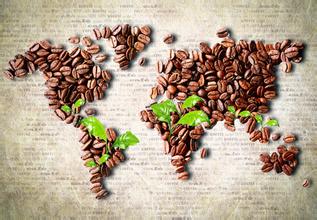
Save Coffee half of the arable land for coffee production will disappear by 2050
It's hard to imagine what it would be like without this rich, bitter black liquid in a world that consumes 1.5 billion cups of coffee a day. But it is not impossible for such a world without coffee to become a reality. Scientists tell us that half of the arable land needed to produce coffee will disappear by 2050. Arabica, the most consumed coffee variety in the world, will be in the wild by 2080.

Introduction to the characteristics of the manor producing area of Brazilian boutique coffee with full taste
The largest coffee producer, which accounts for 1/3 of the world's coffee consumption, accounts for 1/3 of the world's coffee consumption and has a place in the global coffee market, although Brazil faces several times more natural disasters than other regions. but its acreage is enough to make up for it. There are many kinds of coffee here, but its industrial policy is large and cheap, so excellent coffee and
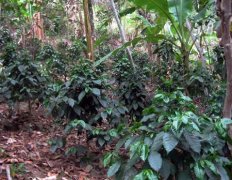
Production of coffee beans coffee output
Coffee trees take 3-5 years from planting to fruiting. 6-10 years of coffee trees are the most likely to bear fruit, about 15-20 years, is the harvest period. Coffee trees are usually bred in nurseries and grow into saplings, and then moved to coffee farms a year later, in full compliance with the way the Arabs planted and cultivated coffee trees. Coffee trees will continue to take root downward and upward in the first four or five years of their growth.

Introduction of the whole process from coffee tree to fruiting
One of the characteristics of a coffee tree is that its fruit can bear fruit several times a year, and another is that flowers and fruits (also known as cherries) coexist at different stages of ripening. The whole coffee harvest is swayed by the vagaries of nature. If the fruit is too ripe, the beans in it will rot. If it is not ripe enough, the beans picked will not ripen by themselves. So bean pickers have to go through

The production of high-quality coffee beans
Coffee trees take 3-5 years from planting to fruiting. 6-10 years of coffee trees are the most likely to bear fruit, about 15-20 years, is the harvest period. Coffee trees are usually bred in nurseries and grow into saplings, and then moved to coffee farms a year later, in full compliance with the way the Arabs planted and cultivated coffee trees. Coffee trees will continue to take root downward and upward in the first four or five years of their growth.

Aromatic Burundi Fine Coffee Flavor Taste Manor Features
Burundi is one of the least developed countries in the world declared by the United Nations. The economy is dominated by agriculture. More than 90% of the population is engaged in agriculture and animal husbandry. The main food crops are corn, rice, sorghum, potato and banana. The main cash crops are coffee, tea, cotton and so on. Animal husbandry has declined in recent years. The main industries are agricultural products processing, textile, cigarette, power generation and so on. Burundi

Analysis of the process from coffee tree planting to coffee bean harvest
Coffee trees take 3-5 years from planting to fruiting. 6-10 years of coffee trees are the most likely to bear fruit, about 15-20 years, is the harvest period. Coffee trees are usually bred in nurseries and grow into saplings, and then moved to coffee farms a year later, in full compliance with the way the Arabs planted and cultivated coffee trees. Coffee trees will continue to take root downward and upward in the first four or five years of their growth.
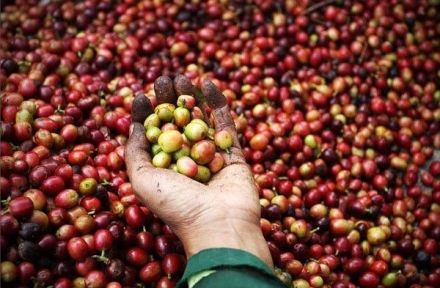
From the planting of coffee trees to the harvest of coffee beans
Coffee trees take 3-5 years from planting to fruiting. 6-10 years of coffee trees are the most likely to bear fruit, about 15-20 years, is the harvest period. Coffee trees are usually bred in nurseries and grow into saplings, and then moved to coffee farms a year later, in full compliance with the way the Arabs planted and cultivated coffee trees. Coffee trees will continue to take root downward and upward in the first four or five years of their growth.
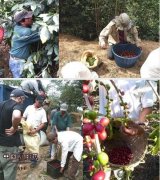
It takes 3-5 years from coffee tree planting to coffee bean harvest.
Coffee trees take 3-5 years from planting to fruiting. 6-10 years of coffee trees are the most likely to bear fruit, about 15-20 years, is the harvest period. Coffee trees are usually bred in nurseries and grow into saplings, and then moved to coffee farms a year later, in full compliance with the way the Arabs planted and cultivated coffee trees. Coffee trees will continue to take root downward and upward in the first four or five years of their growth.

The birth of coffee beans (1)
Coffee trees take 3-5 years from planting to fruiting. 6-10 Coffee trees bear fruit most easily in 15-20 years, which is the harvest period. Coffee trees are usually bred in nurseries, grown into saplings, and then moved to coffee plantations a year later, following exactly the same methods used by Arabs to grow coffee trees. For the first four or five years of its life, coffee trees take root downwards and grow upwards.
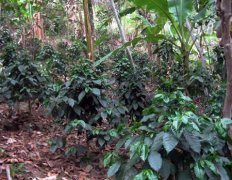
Coffee trees take 3-5 years from planting to fruiting.
Coffee trees take 3-5 years from planting to fruiting. 6-10 years of coffee trees are the most likely to bear fruit, about 15-20 years, is the harvest period. Coffee trees are usually bred in nurseries and grow into saplings, and then moved to coffee farms a year later, in full compliance with the way the Arabs planted and cultivated coffee trees. Coffee trees will continue to take root downward and upward in the first four or five years of their growth.

Brazilian fine coffee with typical iodine flavor Taste Manor Features
In the 1630s Portuguese expeditions were sent to establish colonies in Pakistan. The governor was appointed in 1549. Later, the whole colony was unified along the Atlantic coast under Portugal rule. The French invaded in 1555 and occupied what is now Rio de Janeiro, intending to establish a French colonial stronghold in South America. However, since the French were unable to attract colonists from Europe,
General knowledge of boutique coffee from coffee tree planting to coffee bean harvest
Coffee trees take 3-5 years from planting to fruiting. 6-10 years of coffee trees are the most likely to bear fruit, about 15-20 years, is the harvest period. Coffee trees are usually bred in nurseries and grow into saplings, and then moved to coffee farms a year later, in full compliance with the way the Arabs planted and cultivated coffee trees. Coffee trees will continue to take root downward and upward in the first four or five years of their growth.

Introduction of high-quality coffee beans with the characteristics of Brazilian coffee flavor and taste varieties
The Portuguese expedition established a colony in Pakistan in the 1630s. The Governor was appointed in 1549. The entire colony was then United along the Atlantic coast under Portuguese rule. The French invaded in 1555, occupied the equivalent of present-day Rio de Janeiro, and intended to set up a French colonial stronghold in South America. However, because the French were unable to attract colonists from Europe,
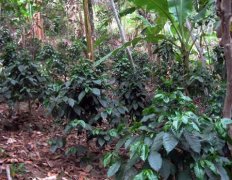
Production of coffee beans Coffee trees from planting to fruiting
Coffee trees take 3-5 years from planting to fruiting. 6-10 years of coffee trees are the most likely to bear fruit, about 15-20 years, is the harvest period. Coffee trees are usually bred in nurseries and grow into saplings, and then moved to coffee farms a year later, in full compliance with the way the Arabs planted and cultivated coffee trees. Coffee trees will continue to take root downward and upward in the first four or five years of their growth.